




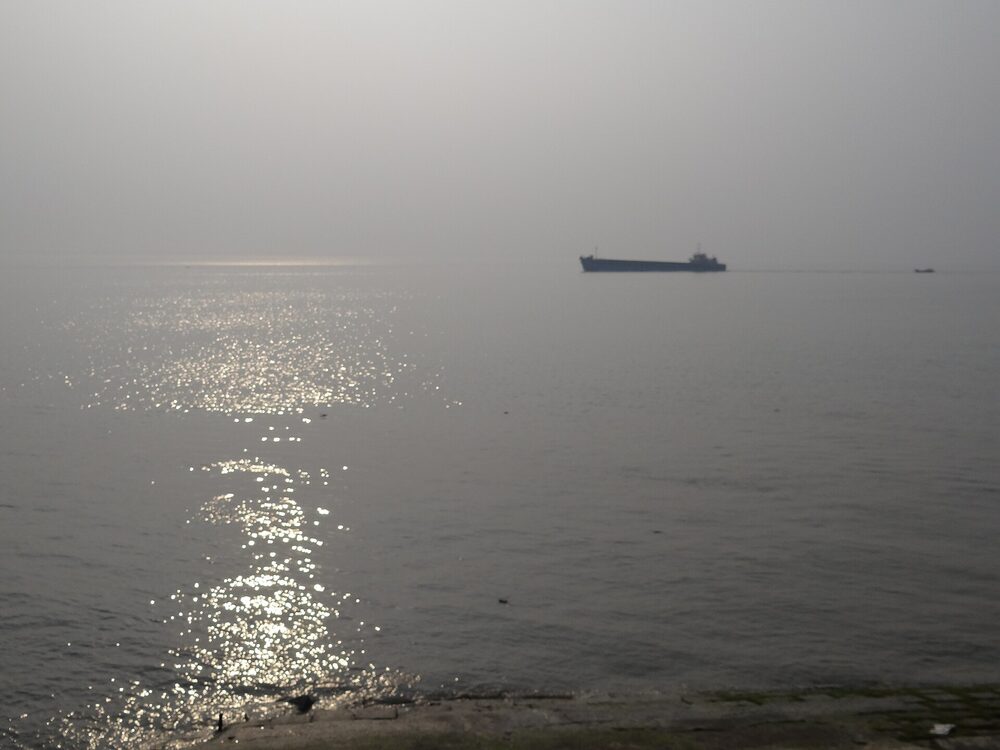
Akalipur Guhya Kali Temple - The Mysterious Shrine of Birbhum
Discover the ancient Guhya Kali Temple of Akalipur, where Bengal's spiritual traditions, fascinating legends and historical heritage come together.

About Akalipur Guhya Kali Temple
Away from the busy pilgrimage routes of Bengal, the village of Akalipur in Birbhum district keeps a quiet but remarkable spiritual heritage. Near the Brahmani River, the Guhya Kali Temple is a place where history, devotion and local folklore come together.
Dedicated to Maa Guhyakali, the temple is known for an unusual form of Goddess Kali. Unlike the familiar standing images of Kali worshipped across much of Bengal, the deity here is shown in a distinctive seated posture, and serpents are an important part of her imagery. In local tradition she is described as seated on a serpent-themed pedestal.
The temple is traditionally associated with Maharaja Nandakumar, whose name is closely connected with its establishment. Its unusual polygonal architecture and peaceful rural surroundings make it a worthwhile place to visit for travellers exploring the lesser-known spiritual heritage of West Bengal.
The shrine is also known as Akalipur Guhya Kali Mandir, Guhyakali Temple, Gujjha Kali Temple and Gupta Kali Temple.
To plan a wider journey, see our Birbhum district guide and our pages on spiritual places in West Bengal.
Things to See
- The seated Maa Guhyakali idol
- The unusual polygonal brick temple with its curved roof
- The peaceful village setting near the Brahmani River
- The traditional local fair at Paush Sankranti (seasonal)
Quick Information
Akalipur Guhya Kali Temple
Spiritual Place
Birbhum
West Bengal
Maa Guhyakali
Nalhati / Rampurhat
October - February
Temple & Heritage
The Fascinating History of Maa Guhyakali
The Guhya Kali Temple at Akalipur is closely associated with Maharaja Nandakumar, the eighteenth-century Bengal official who was born at nearby Bhadrapur in present-day Birbhum. West Bengal Tourism links the temple with him and describes a history that extends beyond 300 years.
Historical accounts connect Nandakumar with the temple. He lived at a time when the East India Company was establishing its authority in Bengal, and he was executed in Calcutta in 1775. This places the temple's story in the eighteenth century. The figure of "over 300 years" is also widely quoted, and it is best read as an approximate, traditional estimate.
In Bengal's Shakta traditions the Goddess is worshipped as the supreme power (Shakti). Birbhum is a district of famous shrines, such as Tarapith and the Nalateswari Temple at Nalhati. Guhyakali adds a lesser-known and deeply local chapter to this story. The word Guhya is commonly explained as "hidden" or "secret".
A note on sources
Historical accounts differ about the exact date and circumstances of the temple's establishment. Most accounts credit Maharaja Nandakumar, while some mention his son Gurudas. No firm construction date has been verified, so none is given here. Stories about the Goddess's idol are part of oral tradition and are described separately below.
The Mysterious Story Behind the Goddess
Like many old shrines, Akalipur is surrounded by stories handed down through generations. What follows is local legend and oral tradition. These stories are shared respectfully as part of the temple's heritage and are not presented as verified historical events.
According to local legend, the idol is associated with Jarasandha, the legendary king of Magadha, who is said to have worshipped the Goddess in secret. It is traditionally believed that this is how she came to be called Gupta Kali, meaning "hidden Kali", a name that became Guhyakali in popular speech.
Local folklore suggests that the idol was lost over the ages and recovered much later. Some accounts connect its recovery with the river Ganga and with the royal history of Kashi, while the details vary from one telling to another.
Traditional narratives associate the Goddess's establishment at Akalipur with Maharaja Nandakumar. It is told that Nandakumar was instructed in a dream to bring the Goddess to a quiet place near his birthplace, beside the Brahmani River.
Local folklore also says that the temple was meant to be completed in a single night but was never finished, and that cracks appeared in its walls when Nandakumar died. These are popular beliefs rather than documented facts.
Historical accounts associate Nandakumar with the temple. The stories about Jarasandha, the dream and the recovery of the idol from the river belong to folklore and cannot be independently verified.
A Rare and Unusual Form of Goddess Kali
The best-known form of Kali in Bengal, worshipped at Kali Puja, usually stands with four arms over the figure of Shiva. The Guhyakali of Akalipur looks very different, and this is a large part of the temple's fame.
- Seated posture: the Goddess is represented seated in a lotus-style posture, rather than in the standing form commonly seen in Bengal.
- Black stone: the idol is traditionally described as a black stone image.
- Two arms: in recent photographs one hand is raised in blessing and the other is open. Traditional descriptions also mention a sword and a serpent noose, so accounts of the hand attributes differ.
- Serpent imagery: photographs show a snake coiled at the waist and snake-shaped earrings, and the Goddess is described as seated on a serpent-themed pedestal.
- Panchamundi seat: the idol is associated with a Panchamundi seat, a tantric tradition of a seat of five skulls.
The idol is usually dressed and ornamented, so what you see may look different from older descriptions. Please ask permission before photographing the deity.
An Unusual Historic Temple Structure
The Guhya Kali Temple does not look like a typical Bengal temple. It is a compact, traditionally brick-built shrine with a polygonal plan, rounded curved walls and a tall curved roof that rises to a pointed finial. It stands in a relatively secluded rural setting, a quiet and historic building in Birbhum, a district where brick temples are an important part of the architectural heritage.
How many sides? West Bengal Tourism describes a unique hexagonal structure, while other published descriptions use different terms, including octagonal. Photographs show a multi-faceted, polygonal outline. Because published accounts disagree and we could not verify the exact form, we do not state a number of sides.
Bare brick or painted: photographs of the temple show it both in bare brick and painted in red and yellow. What you see on a visit may therefore differ from some pictures.
Worship Traditions of Akalipur Guhya Kali Temple
Worship at Akalipur follows traditional rhythms, with a few special occasions in the Bengali calendar. Dates change every year, so please confirm them with a Bengali almanac or locally before you plan a visit around a festival.
Traditional daytime worship, with daily bhog (food offering) and arati. Published reports mention worship around 11:00-11:30 AM. Timings can change, so please confirm current timings locally.
A special worship is traditionally held on the fourteenth day of the bright fortnight of the Bengali month of Ashwin, in autumn.
Another special worship, known as Ratanti Kali Puja, is traditionally held on Magh Krishna Chaturdashi, the fourteenth day of the dark fortnight of Magh, in winter.
A traditional local fair is associated with Paush Sankranti in mid-January, when the village is livelier than usual.
No night-time Kali Puja on Diwali
Unlike most Kali temples across Bengal, special night-time Kali Puja is traditionally not performed at Akalipur on the night of Kali Puja, which falls on the new-moon night of Diwali. According to local belief, the Goddess herself is thought to leave the sanctum that night and move through the village. This is a matter of faith and local tradition, which we share respectfully; it is not presented as a verified fact. Visitors should not expect a Diwali-night puja at this temple.
How to Reach Akalipur Guhya Kali Temple
Location: Akalipur, Nalhati II, Birbhum, West Bengal. The distances below are approximate, so please check your actual route before travelling.
Nalhati Junction and Rampurhat Junction are the useful railway access points. From either station you can continue by local taxi, auto or other available road transport.
Akalipur is approximately 25 km from Rampurhat according to West Bengal Tourism, and approximately 11 km from Nalhati according to published reporting.
Netaji Subhas Chandra Bose International Airport in Kolkata is the major airport gateway. From there, continue towards Birbhum by road or rail.
Get Google Maps directions to the temple (24°15′51″N, 87°56′25″E). Need help with the rest of your route? Use our Plan Your Trip page.
Best Time to Explore Akalipur
Pleasant weather and a festive atmosphere.
Comfortable weather for temple visits and exploring Birbhum.
Hot weather. Early morning visits are preferable.
Monsoon greenery, although rural roads may be affected by rain.
Our recommendation: October to February is generally the most comfortable period. If you wish to be here for a special puja occasion, confirm the dates according to the Bengali calendar.
Explore More Places Around Akalipur
Akalipur fits naturally into a spiritual circuit of Birbhum. The distances shown are approximate straight-line distances worked out from map coordinates; the road distance will be longer.
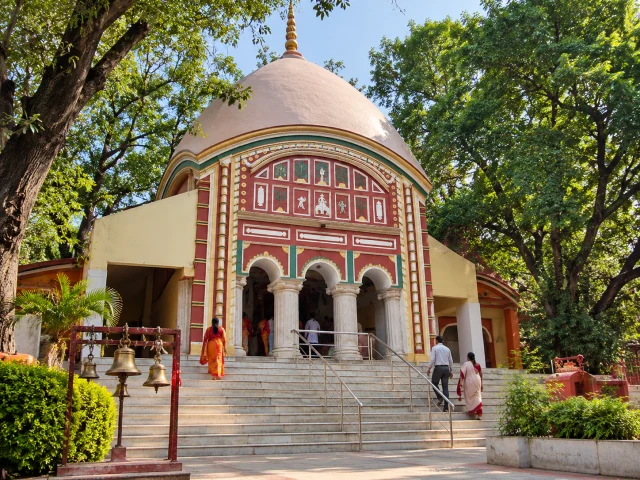
Nalateswari Temple
Nalhati, Birbhum
Regarded as one of the traditional Shakti Peethas in Bengal, the temple holds spiritual significance within the sacred pilgrimage heritage of Birbhum.
≈ 11 km away (straight line)
View Destination →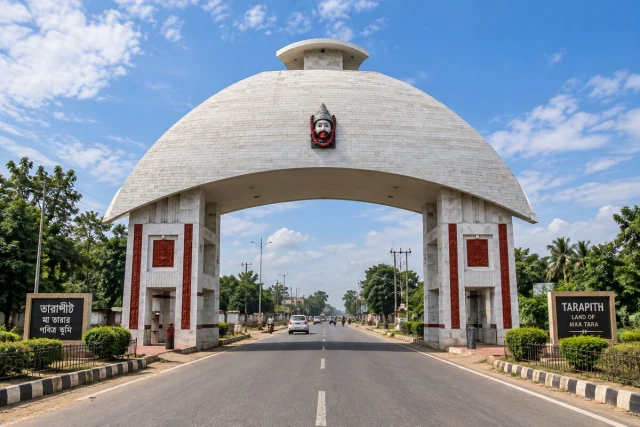
Tarapith
Rampurhat
Tarapith is considered one of the most powerful Shakti Peethas associated with the Tantric tradition, and is closely linked with the 19th-century saint…
≈ 22 km away (straight line)
View Destination →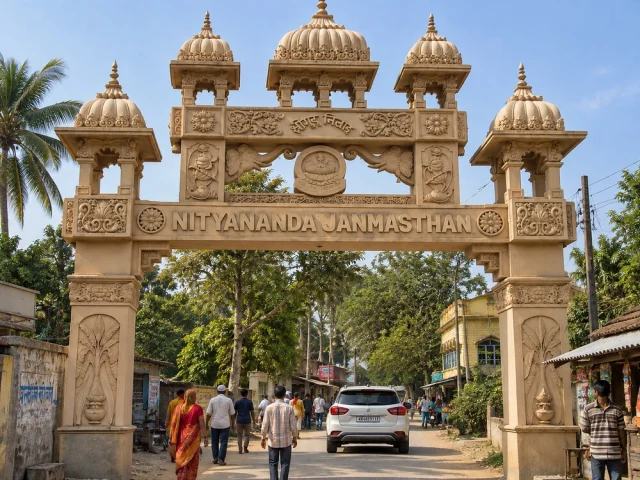
Birchandrapur - Ekachakra Dham
Birchandrapur, Birbhum
A living centre of Gaudiya Vaishnava pilgrimage, Birchandrapur/Ekachakra Dham brings together the Nitai Bari, an ISKCON temple and other historic shrines in…
≈ 24 km away (straight line)
View Destination →Things to Know Before Visiting
- Prefer visiting during daylight hours.
- Check current darshan and puja timings locally.
- Respect temple customs and remove footwear where required.
- Ask permission before photographing the deity.
- Carry drinking water and cash.
- Arrange return transportation in advance.
- Maintain cleanliness around the temple premises.
Entry fees, opening hours, parking and facilities are not officially published online, so please confirm them locally. More general advice is on our travel tips page.
Frequently Asked Questions
Where is Akalipur Guhya Kali Temple located?
The temple is in Akalipur village, Nalhati II block, Birbhum district, West Bengal (PIN 731237), near the Brahmani River and the village of Bhadrapur. It is approximately 11 km from Nalhati and approximately 25 km from Rampurhat.
Why is Akalipur Temple famous?
It is known for its unusual seated, serpent-themed form of Goddess Kali, its association with Maharaja Nandakumar, its distinctive polygonal brick structure and the legends told about it.
Who established Akalipur Guhya Kali Temple?
The temple is traditionally associated with Maharaja Nandakumar. Some accounts also mention his son Gurudas. The exact date and circumstances of its establishment are not firmly documented, and accounts differ.
What is the story behind Maa Guhyakali?
According to local legend, the Goddess was secretly worshipped by Jarasandha, the king of Magadha. The idol is said to have been lost and later recovered, and traditional narratives link her establishment at Akalipur with Maharaja Nandakumar. These are folklore and oral tradition, not verified history.
What is unique about the Goddess's idol?
The Goddess is shown seated, rather than standing, on a serpent-themed pedestal. She is traditionally described as a two-armed black stone image with serpent imagery and a Panchamundi seat.
When is the best time to visit Akalipur?
October to February is generally the most comfortable period. March to June is hot, so go early in the morning, and July to September is green but rural roads may be affected by rain.
How can I reach Akalipur from Rampurhat?
Akalipur is approximately 25 km from Rampurhat according to West Bengal Tourism. You can continue from Rampurhat Junction by local taxi, auto or other road transport. Please check your actual route before travelling.
Is special Kali Puja performed here on Diwali?
Traditionally, no. Special night-time Kali Puja is not performed at this temple on the night of Diwali Kali Puja. Local belief explains this in terms of the Goddess herself moving through the village that night, a matter of faith and tradition.
Which railway station is nearest to Akalipur?
Nalhati Junction is the closer of the two useful railway access points, and Rampurhat Junction is the other. Both are connected to Akalipur by road.
Which places can I visit near Akalipur?
You can combine your visit with the Nalateswari Temple at Nalhati, the Tarapith Temple and Birchandrapur. Our Birbhum district guide lists more places.


